
Why a Serious Shoulder Injury Can Affect Both Your Workers Compensation and Social Security Disability Claims
Most people think of a shoulder injury as something that will heal with time, physical therapy, or perhaps surgery, and sometimes that is exactly what happens; but for many Alabama workers—particularly those who have spent their careers performing physically demanding jobs—a serious shoulder injury can permanently change their ability to earn a living.
In some cases, it can even lead to a claim for both Alabama Workers’ Compensation and Social Security Disability benefits. Understanding why requires looking beyond the MRI and understanding how both legal systems evaluate disability.
Shoulder Injuries Are Among the Most Common Workplace Injuries
Over the past 30 years, we have represented hundreds of injured workers who suffered serious shoulder injuries while performing their jobs. Some of the occupations we most commonly see include:
- Nurses and Certified Nursing Assistants (CNAs);
- Construction workers;
- Manufacturing and production employees;
- Truck drivers;
- Warehouse workers;
- Steel and Iron workers; and
- Convenience store employees.
Many of these jobs require workers to repeatedly lift, reach overhead, push, pull, or carry heavy objects throughout the workday, and those repetitive activities place tremendous stress on the shoulder.
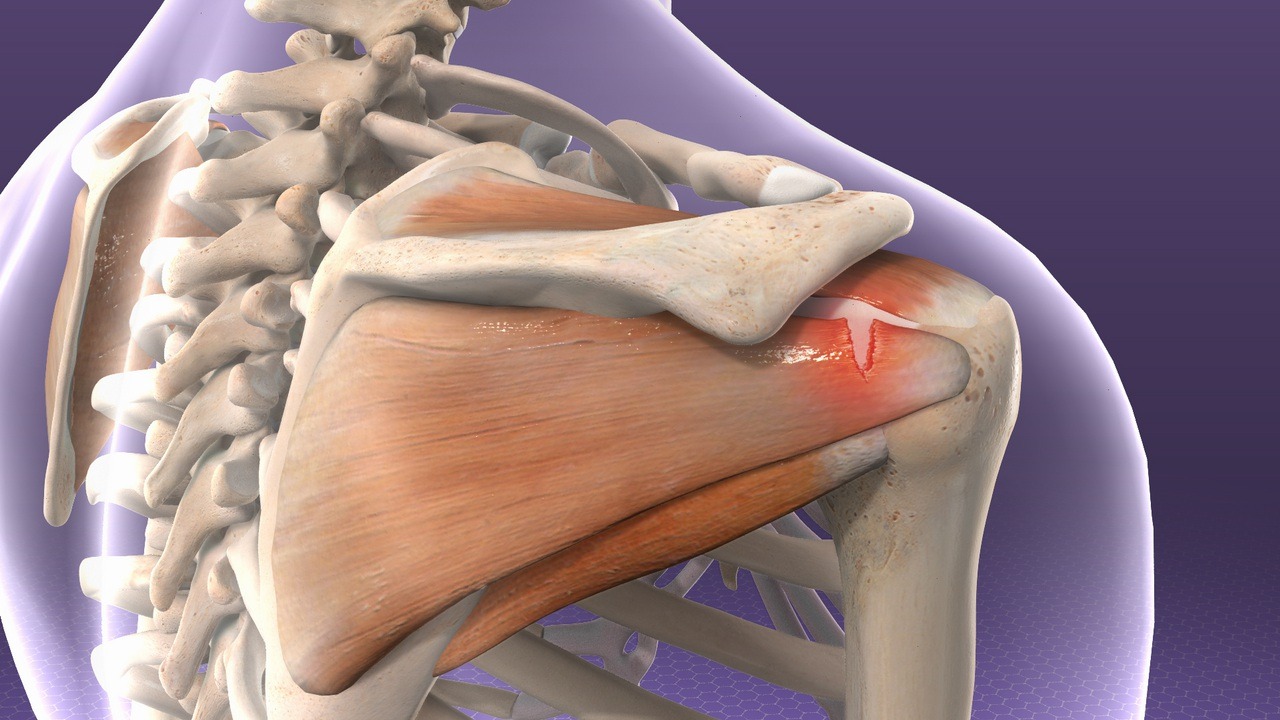
What Is a Rotator Cuff Tear?
The rotator cuff is made up of four muscles and their tendons that stabilize the shoulder and allow the arm to move in nearly every direction. When one or more of those tendons tears, a worker may experience:
- shoulder pain;
- weakness;
- loss of motion;
- difficulty lifting the arm;
- pain reaching overhead;
- nighttime pain; and
- difficulty performing even routine activities.
Some tears occur suddenly after a lifting injury or fall, while others develop gradually over many years of physical labor.
“It’s Just Wear and Tear”
One of the most common arguments made by workers’ compensation insurance carriers is: “This isn’t a work injury. It’s simply degeneration.” That statement often causes injured workers to believe they have no claim-but that is not necessarily true.
Many people have degenerative changes in their shoulders and continue working for years without pain or restrictions. The important question is often not whether degeneration existed, the question is: Did the work accident or repetitive job duties aggravate or worsen that underlying condition?
If the answer is yes, Alabama workers’ compensation law may still provide benefits.
Recommended Reading: Preexisting Conditions and How they Affect an Alabama Workers’ Compensation Claim
Many workers undergo rotator cuff repair surgery and recover well, while many others continue to experience:
- chronic pain;
- weakness;
- loss of endurance;
- reduced range of motion;
- permanent lifting restrictions; or
- difficulty performing overhead work.
For someone with a desk job, those limitations may be manageable, but for someone whose career depends upon using both arms throughout the day, they may be career-ending.
Why the Dominant Arm Matters
A serious injury involving your dominant arm often has a much greater effect on your ability to work than an injury involving your non-dominant arm. Imagine trying to perform your job if you cannot reliably:
- lift overhead;
- reach across your body;
- push or pull heavy objects;
- grip tools;
- carry materials; or
- repeatedly use your dominant arm throughout an eight-hour workday.
Those limitations may prevent a person from returning to many occupations that require medium or even heavy physical work.
Shoulder Injuries Can Be More Than a Workers’ Compensation Claim
Many workers assume that if they receive workers’ compensation benefits, they do not need to think about Social Security Disability. Sometimes that is true, sometimes it is not.
Suppose a 58-year-old construction worker suffers a serious rotator cuff tear involving his dominant arm. After surgery, he is permanently restricted to lifting no more than ten pounds with that arm and cannot perform repetitive overhead work. He has spent his entire career performing heavy manual labor and has no experience doing office work.
Although his shoulder injury may begin as an Alabama workers’ compensation case, it may also become a Social Security Disability case.
Age and Work History Matter in Social Security Disability Cases
For older workers, particularly those who have spent decades performing physical labor, permanent restrictions involving the dominant arm can have a dramatic impact on employability.
In some situations, the Social Security Medical-Vocational Guidelines—often called the “Grid Rules”—may direct a finding of disabled based upon the worker’s age, education, work history, and residual functional capacity.
Recommended Reading: What are the Grid Rules and How are they Used in a claim for Disability Benefits?
Workers’ Compensation and Social Security Ask Different Questions
Although the same shoulder injury may support both claims, the legal standards are different. In an Alabama workers’ compensation case, the court may consider:
- whether the injury arose out of employment;
- permanent restrictions;
- pain;
- loss of earning capacity;
- vocational disability; and
- whether the worker can obtain reasonably gainful employment.
Social Security asks a different question: Can this individual perform substantial gainful activity on a regular and continuing basis?
The same medical evidence may be used in both cases, but it is evaluated under different legal standards.
Recommended Reading: What Does It Mean for an Injury to “Arise Out of and Occur in the Ordinary Course of Employment”?
Recommended Reading: What Does Substantial Gainful Activity Mean?
A shoulder injury may seem straightforward, but in reality, it can involve complicated medical and legal issues. Questions about degeneration, aggravation of preexisting conditions, permanent restrictions, vocational disability, and Social Security eligibility often arise from what initially appeared to be “just” a torn rotator cuff.
At Powell & Denny, we have represented injured and disabled workers throughout Alabama for more than 30 years. We understand that serious claims are rarely decided by a diagnosis alone. They are decided by how the injury affects the person’s ability to function, work, and earn a living.
If you have questions about an Alabama Workers’ Compensation claim, or a claim for Social Security Disability benefits, don’t hesitate to contact the experienced attorneys at Powell and Denny today a free consultation; remember. Virtual appointments are available through Zoom so you can meet with one of the attorneys of Powell and Denny from wherever you live, and remember-there is no fee unless you win.
Powell & Denny: We Work When You Can’t.
Offices in Birmingham, Alabama and Huntsville, AL
We Wrote the Book
My Alabama Disability Claim by William Powell & Gregory Denny Click Here to Get Your Free Copy


-
 5.0/5.0
A++++++ got results and staff is friendly
-
5.0/5.0
A++++++ got results and staff is friendly
-
5.0/5.0
Persevering for 2-3 years to get my disability. Thank You.
-
5.0/5.0
Persevering for 2-3 years to get my disability. Thank You.
-
 5.0/5.0
William Powell is an excellent attorney and a leader in our local bar.
