
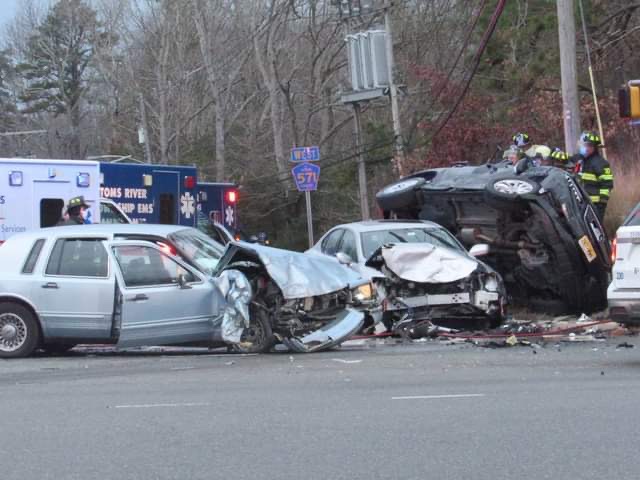
I Was Injured in a Car Wreck in Alabama. What Are My Rights?
A serious car wreck can create several problems at once.
You may have a damaged vehicle, medical bills, missed time from work, and injuries that you do not yet know will be temporary or permanent. At the same time, you may already be receiving calls from insurance adjusters asking what happened, how badly you are hurt, and whether you are willing to give a recorded statement.
That can leave you with a lot of questions.
Who is responsible for the wreck? Who pays my medical bills? What if the insurance company says I was partly at fault? What if I was not wearing a seat belt? What happens if the other driver does not have enough insurance? What if I already had back or neck problems before the wreck? What if my injuries keep me from returning to work?
Alabama law provides potential remedies when someone is injured because of another person’s negligence. However, Alabama also has some legal rules that can make car wreck claims different from claims in many other states.
Understanding those rules can help you protect your rights after an Alabama car wreck.
What Is Negligence Under Alabama Law?
Most Alabama car wreck claims are based on negligence. Unlike wantonness, ordinary negligence does not have a single general statutory definition under Alabama civil law. Instead, the basic principles have developed through Alabama case law.
In Martin v. Arnold, 643 So. 2d 564 (Ala. 1994), a case arising from a motor-vehicle collision, the Alabama Supreme Court explained that a negligence claim requires proof of four things: a legal duty owed to the injured person, a breach of that duty, proximate causation, and damage or injury.
In a car wreck case, negligence may involve a driver who:
- runs a red light or stop sign;
- follows another vehicle too closely;
- fails to yield the right of way;
- makes an unsafe lane change;
- drives too fast for the circumstances;
- becomes distracted while driving;
- fails to keep a proper lookout; or
- otherwise fails to operate the vehicle with reasonable care.
But proving that the other driver did something wrong is not necessarily the end of the case. You generally must also prove that the driver’s conduct caused the collision and that the collision caused the injuries and damages for which you are seeking compensation.
Those can become three separate disputes:
Who caused the wreck?
Did the wreck cause the medical condition being claimed?
What damages resulted from that condition?
An insurance company may concede one issue while strongly contesting another. For example, the insurance company may admit that its driver ran a red light but argue that the collision did not cause your back surgery six months later.
That is why a serious car wreck claim can become considerably more complicated than simply determining who received the traffic ticket.
What If the Insurance Company Says the Wreck Was Partly My Fault?
This is one of the most important things to understand about Alabama car wreck law. Alabama follows the doctrine known as contributory negligence.
Alabama does not use the comparative-negligence approach followed by many other states, where an injured person’s recovery may simply be reduced according to his or her percentage of fault. In an Alabama negligence case, contributory negligence that proximately contributed to the injury can operate as a complete defense to the negligence claim.
Alabama courts have explained that contributory negligence is more than simply showing that an injured person did something wrong. In Ridgeway v. CSX Transportation, Inc., 723 So. 2d 600 (Ala. 1998), the Alabama Supreme Court explained that the defendant must prove that the injured person knew of the dangerous condition, appreciated the danger under the surrounding circumstances, and failed to exercise reasonable care by placing himself in the way of danger. The Court also emphasized that contributory negligence is an affirmative defense, meaning the defendant has the burden of proving it. See also Serio v. Merrell, Inc., 941 So. 2d 960 (Ala. 2006)
That makes statements such as these potentially important:
- “You were speeding too.”
- “You should have seen the other car.”
- “You were distracted.”
- “You changed lanes.”
- “You could have avoided the collision.”
The fact that an insurance company accuses you of contributing to the wreck does not mean that you were legally contributorily negligent-the evidence still matters.
Additionally, there is also an important distinction between negligence and wantonness. They are different legal theories under Alabama law, and contributory negligence is not a defense to an otherwise valid wantonness claim. Wantonness, however, has its own legal requirements and should not simply be treated as another name for serious negligence.
Recommended Reading: The Insurance Company Says the Car Wreck Was Partly My Fault. Can I Still Recover in Alabama?
What Is Wantonness Under Alabama Law?
Alabama law distinguishes ordinary negligence from wantonness.
Under Ala. Code § 6-11-20(b)(3), wantonness is defined as conduct carried on with a “reckless or conscious disregard of the rights or safety of others.”
The Alabama Supreme Court explained the distinction in Ex parte Essary, 992 So. 2d 5 (Ala. 2007), an automobile-collision case. Wantonness involves consciously doing an act, or failing to perform a duty, while knowing the existing circumstances and being conscious that injury will likely or probably result. Unlike an intentional tort, however, the person does not have to actually intend to injure someone.
Essary is also important because the Court emphasized that wantonness is not simply a more serious form of negligence. Negligence generally involves inattention, thoughtlessness, or a failure to exercise reasonable care. Wantonness requires the additional element of consciousness of the danger.
In Essary, the defendant made what witnesses described as a “rolling stop” before attempting to drive through an intersection between two approaching vehicles. Although that conduct could constitute negligence, the Alabama Supreme Court concluded that the evidence did not establish the necessary consciousness that injury was likely or probable. The Court therefore held that the evidence was insufficient to support the wantonness claim.
The distinction can be particularly important in an Alabama car wreck case because contributory negligence is not a defense to wantonness. However, merely describing another driver’s conduct as reckless does not establish a wantonness claim. Whether conduct rises from negligence to wantonness depends upon the particular facts and evidence.
Recommended Reading: Can the Insurance Company Deny My Claim Because I Wasn’t Wearing a Seat Belt?
This is another question that frequently worries people after a serious wreck.
Sometimes the issue comes up because an insurance adjuster asks whether the injured person was wearing a seat belt. Other times, the injured person simply assumes “I wasn’t wearing my seat belt, so I probably don’t have a case.”
That conclusion should not automatically be made.
Whether another driver’s negligence caused the collision and what legal effect seat-belt nonuse may have are separate questions. Alabama has specific law addressing seat-belt use, and the issue deserves more attention than simply saying that a person who was not wearing a seat belt was “partly at fault.” Under Ala. Code § 32-5B-7, evidence that someone failed to wear a seat belt generally may not be admitted to establish contributory negligence or reduce damages in a civil action.
We address that question separately in this series.
Should I Give the Insurance Company a Recorded Statement?
An insurance adjuster may contact you shortly after a wreck. The adjuster may sound friendly and simply say that he or she needs to “get your side of the story.” But that request may come before you know the full extent of your injuries.
There is a significant difference between providing information necessary to report a claim and agreeing to a detailed recorded interview concerning the collision, your injuries, your prior medical history, and your current symptoms.
Consider someone who says two days after a wreck “My back is sore, but I think I’ll be okay.”
At the time, that may be completely truthful.
Suppose that person continues experiencing symptoms, undergoes an MRI several weeks later, and eventually requires surgery. The earlier statement may then become part of a dispute about whether the person’s later medical problems were caused by the wreck.
Similar problems can arise when people are asked to estimate speeds, distances, or timing when they really do not know the answers.
Before giving a recorded statement, it is important to understand who is requesting it, why it is being requested, and what obligations you actually have.
Recommended Reading: Should I Give the Insurance Company a Recorded Statement After an Alabama Car Wreck?
What If the Other Driver Does Not Have Enough Insurance?
A person can suffer a very serious injury in a wreck caused by someone carrying only the minimum amount of liability insurance. Alabama’s minimum automobile liability limits are commonly referred to as 25/50/25:
- $25,000 for bodily injury or death to one person;
- $50,000 for bodily injury or death arising from one accident; and
- $25,000 for property damage.
The Alabama Department of Insurance currently identifies those as Alabama’s minimum liability requirements.
Twenty-five thousand dollars may sound substantial until someone suffers an injury involving an ambulance, hospitalization, diagnostic testing, surgery, rehabilitation, lost wages, or permanent disability.
The losses from a serious injury can exceed the other driver’s liability limits very quickly. That is one reason uninsured and underinsured motorist coverage can become extremely important.
Under Ala. Code § 32-7-23, Alabama automobile liability policies generally must provide uninsured-motorist coverage unless the named insured rejects that coverage. The statute’s definition also addresses situations in which the available liability limits are less than the damages the injured person is legally entitled to recover.
In other words, determining what insurance is available after a serious Alabama car wreck may involve more than simply asking “How much insurance did the driver who hit me have?”
There may be other potentially applicable coverage that needs to be investigated.
Recommended Readings: What Is Uninsured and Underinsured Motorist Coverage in Alabama?
What If the Driver Who Hit Me Doesn’t Have Enough Insurance to Pay for My Injuries?
How Much Is My Alabama Car Wreck Case Worth?
There is no honest way to determine the value of a serious car wreck case simply by knowing the diagnosis. Two people can suffer similar injuries and have very different damages.
Consider two people who both suffer a back injury.
One receives conservative treatment for several months, improves, and returns to the same job without restrictions.
The other undergoes surgery, develops permanent restrictions, and can no longer perform the physical job he has done for twenty years.
Those are not the same cases simply because both people injured their backs.
Depending upon the facts, damages in a personal injury case may involve medical expenses, lost income, pain and suffering, permanent injury, future losses, and other legally recoverable damages.
A serious injury can also affect a person’s ability to earn a living long after the initial medical bills have been paid. That is why it can be dangerous to evaluate a serious injury claim before the long-term medical and vocational consequences of the injury are understood.
Recommended Readings: How Much Is My Alabama Car Wreck Case Worth?
What Damages Can I Recover After an Alabama Car Wreck?
What If I Had Back, Neck, or Other Medical Problems Before the Wreck?
Many people involved in car wrecks have previous medical conditions.
A 55-year-old construction worker may already have degenerative changes in his back.
Someone may have undergone a prior neck surgery.
Another person may have arthritis in a knee that is injured again in a wreck.
The existence of a preexisting condition does not automatically answer whether the car wreck caused an injury. The real question may be whether the collision:
- caused an entirely new injury;
- aggravated an existing medical condition;
- caused previously manageable symptoms to become significantly worse; or
- produced new functional limitations.
Medical records can become particularly important because they may allow a comparison between the person’s condition before the wreck and after the wreck.
An insurance company may focus heavily on prior medical treatment when disputing causation, but “you had back problems before” is not the end of the medical-causation analysis.
Recommended Reading: What If I Had a Preexisting Injury Before My Alabama Car Wreck?
What If I Didn’t Go to the Emergency Room?
Not everyone goes directly from a wreck to an emergency room. Some people initially believe they are simply sore. Others are focused on their children, their damaged vehicle, getting home, or dealing with law enforcement at the scene.
Sometimes symptoms become much more noticeable after the immediate stress and adrenaline of the collision have passed.
Failing to go to an emergency room does not, by itself, determine whether someone was injured; however, delays and gaps in medical treatment can create evidentiary problems.
An insurance company may ask “If the wreck really caused this injury, why didn’t you seek treatment sooner?” Or “If the injury was really that serious, why did you stop going to the doctor for three months?”
There may be legitimate answers to those questions. The important point is that the timing and consistency of medical treatment can become evidence in a disputed car wreck claim.
Recommended Readings: I Didn’t Go to the Emergency Room After My Car Wreck. Can I Still Have a Case?
Can a Gap in Medical Treatment Hurt My Alabama Car Wreck Case?
What If the Insurance Company Says the Wreck Didn’t Cause My Injury?
Fault and medical causation are not the same thing.
This distinction is extremely important. An insurance company can admit “Our driver caused the wreck” while simultaneously arguing “The wreck did not cause all of these medical problems.”
Suppose another driver rear-ends you. There may be little dispute about who caused the collision, but six months later, after extensive treatment, your physician recommends back surgery. The insurance company may argue that the surgery is related to degeneration, a prior injury, age, or some other condition rather than the collision.
The dispute is no longer primarily about who caused the wreck-it is about what the wreck caused medically.
Medical records, diagnostic testing, the timing and progression of symptoms, prior medical history, treating physicians’ opinions, and other evidence can all become important.
Recommended Reading: The Insurance Company Says the Wreck Didn’t Cause My Injury. How Do I Prove It Did?
What If My Pain Never Goes Away?
Some car wreck injuries heal completely; others do not.
A person may continue experiencing chronic back or neck pain, headaches, nerve symptoms, weakness, reduced range of motion, difficulty standing or walking, or other limitations long after the wreck. When that happens, the legal issues may extend far beyond the medical bills.
Can you return to your old job?
Can you still lift what your job requires?
Can you stand or walk for an entire workday?
Can you climb, bend, kneel, or reach as frequently as your occupation requires?
Can chronic pain interfere with concentration?
Do medications cause side effects?
Will your employer accommodate permanent restrictions?
A permanent injury can affect someone’s ability to earn a living for years.
That is why Powell & Denny frequently looks beyond the medical diagnosis itself.
A diagnosis tells us what medical condition a person has. Permanent restrictions and functional limitations help tell us what that condition prevents the person from doing.
Those are not always the same question.
Recommended Readings: Can I Recover for Chronic Pain After an Alabama Car Wreck?
Can I Recover Lost Wages After an Alabama Car Wreck?
What If a Car Wreck Permanently Reduces My Ability to Work?
Can I Get Social Security Disability After a Serious Car Wreck?
Possibly.
Social Security Disability does not pay benefits simply because someone was injured in a car wreck. The question is whether the resulting medical conditions satisfy Social Security’s requirements for disability, but a serious car wreck can be the event that begins a much larger disability problem.
Consider a truck driver who suffers serious back and leg injuries in a collision. The driver may eventually reach the point where the doctor says “You cannot return to heavy work.”
That creates an entirely different set of questions.
Can the driver perform lighter work?
Does the driver have skills that transfer to other occupations?
How old is the driver?
What education does the driver have?
How long can the driver sit, stand, or walk?
Does chronic pain interfere with concentration?
Do medications cause side effects?
Can the person work reliably on a sustained basis?
Those are vocational questions, and they can become extremely important in a Social Security Disability claim.
Powell & Denny has written extensively about permanent restrictions, work classifications, vocational experts, transferable skills, age, chronic pain, concentration, medication side effects, and the ability to maintain employment.
Rather than duplicate that material throughout our car wreck articles, we connect readers to it when a serious injury develops into a long-term inability to work.
Recommended Reading: Can I Get Social Security Disability After a Serious Car Wreck?
What If I Was Hurt in a Car Wreck While Working?
A single collision can potentially involve two very different areas of law.
Suppose you are driving for work when another driver runs a red light and hits your vehicle. Depending on the facts, you may potentially have an Alabama workers’ compensation claim because you were injured while working.
At the same time, you may have a personal injury claim against the driver who caused the collision.
Those claims are not the same.
The workers’ compensation claim may involve medical treatment and disability benefits under Alabama’s Workers’ Compensation Act.
The third-party personal injury claim may involve damages against the person or company responsible for causing the wreck.
When both claims exist, they can also interact with one another.
Questions may arise concerning who pays medical bills, who pays disability benefits, what damages can be recovered from the third party, and whether workers’ compensation has reimbursement rights from a later third-party recovery.
This is one reason a work-related car wreck can be substantially more complicated than an ordinary collision.
Recommended Readings: I Was Hit by Another Driver While Working. Do I Have a Workers’ Compensation Claim and a Personal Injury Claim?
Who Pays My Medical Bills If I’m Hurt in a Car Wreck While Working?
Will I Have to Pay Workers Compensation Back If I Settle a Related Personal Injury Claim?
What Evidence Should I Save After a Car Wreck?
Car wreck cases are ultimately proved with evidence. Depending upon the case, important evidence may include:
- photographs or video of the vehicles and scene;
- information identifying drivers, passengers, and witnesses;
- crash reports and other investigative materials;
- insurance information;
- medical records and bills;
- photographs documenting visible injuries;
- employment and wage records;
- records showing missed work;
- communications with insurance companies; and
- other documents or electronic information relating to the collision.
Some evidence can disappear. Vehicles get repaired or destroyed. Surveillance recordings can be overwritten. Witnesses move or become difficult to locate. Memories fade. Electronic information may not remain available forever.
Evidence preservation can become especially important when fault is disputed or when a wreck results in a serious injury.
Recommended Reading: What Evidence Should I Save After an Alabama Car Wreck?
How Long Do I Have to File an Alabama Car Wreck Lawsuit?
Alabama law places deadlines on civil lawsuits. Ala. Code § 6-2-38 generally provides a two-year limitations period for actions involving injury to the person or rights of another when the action is not otherwise specifically enumerated.
But that general statement should not be treated as a universal deadline for every legal issue arising from every motor-vehicle collision.
The applicable deadline can depend on the type of claim, the parties involved, and the circumstances of the case. Claims involving governmental entities, wrongful death, minors, insurance issues, or other unusual circumstances may require separate analysis.
There is also a practical problem with waiting. Evidence can disappear long before a statute of limitations expires.
And an insurance adjuster continuing to communicate with you does not necessarily mean that a legal deadline has stopped running.
Recommended Reading: How Long Do I Have to File a Car Wreck Lawsuit in Alabama?
Does Every Alabama Car Wreck Case Go to Court?
No.
Many car wreck claims are resolved without a trial, but a lawsuit may become necessary when the parties cannot agree about important issues such as:
- who caused the wreck;
- whether the injured person was contributorily negligent;
- whether the collision caused the claimed injuries;
- whether particular medical treatment resulted from the wreck;
- whether the injury is permanent; or
- the amount of damages.
Filing a lawsuit also does not necessarily mean the case will ultimately be tried to a jury.
Litigation is a process.
Depending upon the case, that process may involve pleadings, written discovery, depositions, medical evidence, expert testimony, motions, settlement negotiations, mediation, and potentially trial.
Recommended Reading: What Happens After I File an Alabama Car Wreck Lawsuit?
When Should I Talk to an Alabama Car Wreck Lawyer?
Not every minor automobile accident requires an attorney, but the need for legal advice generally becomes greater as the medical, legal, insurance, and vocational issues become more complicated.
You should consider speaking with an attorney when:
- fault is disputed;
- you are being accused of contributing to the wreck;
- your injuries are serious;
- surgery has been recommended or performed;
- you have substantial medical expenses;
- you have missed significant time from work;
- your doctor gives you permanent restrictions;
- you cannot return to your old job;
- available insurance may be inadequate;
- the collision involved a commercial vehicle;
- the wreck occurred while you were working;
- the insurance company disputes whether the wreck caused your injuries; or
- you are being asked to settle before you understand the long-term consequences of your injuries.
You should also be cautious about resolving a serious injury claim before you understand the long-term consequences of the injury.
A settlement attempts to place a dollar value on the claim today. A permanent injury may continue affecting your health, employment, and ability to earn a living for many years.
Those are very different time horizons.
A Serious Car Wreck Can Become Much More Than a Car Wreck Case
An Alabama car wreck case can begin with a simple question: “Who caused the wreck?”
A serious case can eventually involve much more, and understanding how the different issues fit together can be just as important as determining how the wreck occurred.
Powell & Denny represents injured and disabled people throughout Alabama. Our practice includes personal injury, Alabama workers’ compensation, and Social Security Disability claims. That combination can become particularly important when a serious car wreck does more than damage a vehicle—it affects someone’s health, job, and ability to provide for a family.
If you were seriously injured in an Alabama car wreck and have questions about your rights under Alabama law— don’t hesitate to contact and speak with one of the experienced Alabama Car Wreck attorneys at Powell and Denny today for a free consultation. Appointments are available in person, or virtually via Zoom if more convenient. Powell and Denny would appreciate the opportunity to help. And remember, there is no fee unless you win.
Powell & Denny: We Work When You Can’t.
This article provides general information about Alabama law and is not legal advice concerning any particular case.
We Wrote the Book
My Alabama Disability Claim by William Powell & Gregory Denny Click Here to Get Your Free Copy


-
 5.0/5.0
A++++++ got results and staff is friendly
-
5.0/5.0
A++++++ got results and staff is friendly
-
5.0/5.0
Persevering for 2-3 years to get my disability. Thank You.
-
5.0/5.0
Persevering for 2-3 years to get my disability. Thank You.
-
 5.0/5.0
William Powell is an excellent attorney and a leader in our local bar.
