By William Powell of Powell & Denny | Published February 15, 2026 | Posted in Social Security Disability, Workers Compensation | Tagged Tags: free consultation, NO FEE UNLESS YOU WIN, Why Restrictions Matter More Than Your Diagnosis-Permanent Restrictions |

Why Restrictions Matter More Than Your Diagnosis-Permanent Restrictions
Why Restrictions Matter More Than Your Diagnosis-Permanent Restrictions One of the biggest misconceptions we encounter is that the diagnosis determines the outcome of an Alabama workers’ compensation claim or Social Security Disability case. It often does not. Imagine two workers. Both suffer identical rotator cuff tears. Both undergo the same surgery. Both have identical MRI Read More
Read MoreBipolar Disorder and Social Security Disability Claims in Alabama
Bipolar Disorder and Social Security Disability Claims in Alabama Bipolar disorder—sometimes referred to as manic depression—is a serious mental health condition that can significantly interfere with a person’s ability to maintain full-time employment. The disorder is characterized by extreme mood swings, including episodes of major depression and periods of mania or hypomania. These fluctuations are Read More
Read MoreTBIs and Social Security Disability Claims
TBIs and Social Security Disability Claims Traumatic brain injuries (TBIs) are among the most misunderstood conditions in Social Security Disability cases. Because the effects of a brain injury are often invisible, claimants are frequently met with skepticism—even when their symptoms are life-altering. A traumatic brain injury occurs when a blow or jolt to the head Read More
Read MoreWhy Functional Limitations Matter More Than Medical Diagnoses in Social Security Disability and Alabama Workers’ Compensation Cases
Why Functional Limitations Matter More Than Medical Diagnoses in Social Security Disability and Alabama Workers’ Compensation Cases Why Two People with the Same Diagnosis May Receive Very Different Legal Outcomes Throughout this series, we have discussed several mental abilities that are essential to maintaining employment. We have examined the ability to: understand, remember, and carry Read More
Read MoreWhat Does It Mean to Sustain Competitive Employment?
What Does It Mean to Sustain Competitive Employment? Why Working Occasionally Is Not the Same as Working Full-Time in Social Security Disability and Alabama Workers’ Compensation Cases One of the biggest misconceptions about disability is the belief that a person must be completely incapable of doing any work before qualifying for benefits. That simply is Read More
Read MoreCan You Adapt to Changes in the Workplace?
Can You Adapt to Changes in the Workplace? Why Flexibility, Stress Tolerance, and Adaptability Matter in Social Security Disability and Alabama Workers’ Compensation Cases Most people think of work as a routine. You arrive at the same time each day, perform familiar tasks, and go home at the end of your shift. In reality, however, Read More
Read MoreCan You Interact Appropriately with Supervisors, Coworkers, and the Public?
Can You Interact Appropriately with Supervisors, Coworkers, and the Public? Why Social Functioning Matters in Social Security Disability and Alabama Workers’ Compensation Cases Most jobs require much more than technical skills or physical ability. Whether someone works in an office, a factory, a hospital, a warehouse, or drives a truck, virtually every occupation requires employees Read More
Read MoreWhy Concentration Persistence, and Pace Matter in Social Security Disability and Alabama Workers’ Compensation Cases
Why Concentration Persistence, and Pace Matter in Social Security Disability and Alabama Workers’ Compensation Cases Why Being Able to Start a Task Is Not the Same as Being Able to Sustain Competitive Employment Most people assume disability cases are decided by physical limitations, and those issues are certainly important, but another question is often just Read More
Read MoreCan You Understand, Remember, and Carry Out Instructions?
Can You Understand, Remember, and Carry Out Instructions? Why Memory and Cognitive Limitations Matter in Social Security Disability and Alabama Workers’ Compensation Cases One of the most misunderstood aspects of disability law has nothing to do with lifting, standing, walking, or sitting. Instead, it involves something most of us take for granted until we lose Read More
Read MoreWhy Mental Functional Limitations Matter in Social Security Disability and Alabama Workers’ Compensation Cases
Why Mental Functional Limitations Matter in Social Security Disability and Alabama Workers’ Compensation Cases Why disability claims are often decided by what you can still do—not simply by the name of your diagnosis. When most people think about disability, they think about medical diagnoses. They may have suffered a serious back injury, traumatic brain injury Read More
Read More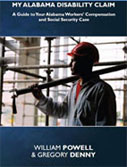
We Wrote the Book
My Alabama Disability Claim by William Powell & Gregory Denny Click Here to Get Your Free Copy


-
 5.0/5.0
A++++++ got results and staff is friendly
-
5.0/5.0
A++++++ got results and staff is friendly
-
5.0/5.0
Persevering for 2-3 years to get my disability. Thank You.
-
5.0/5.0
Persevering for 2-3 years to get my disability. Thank You.
-
 5.0/5.0
William Powell is an excellent attorney and a leader in our local bar.
